
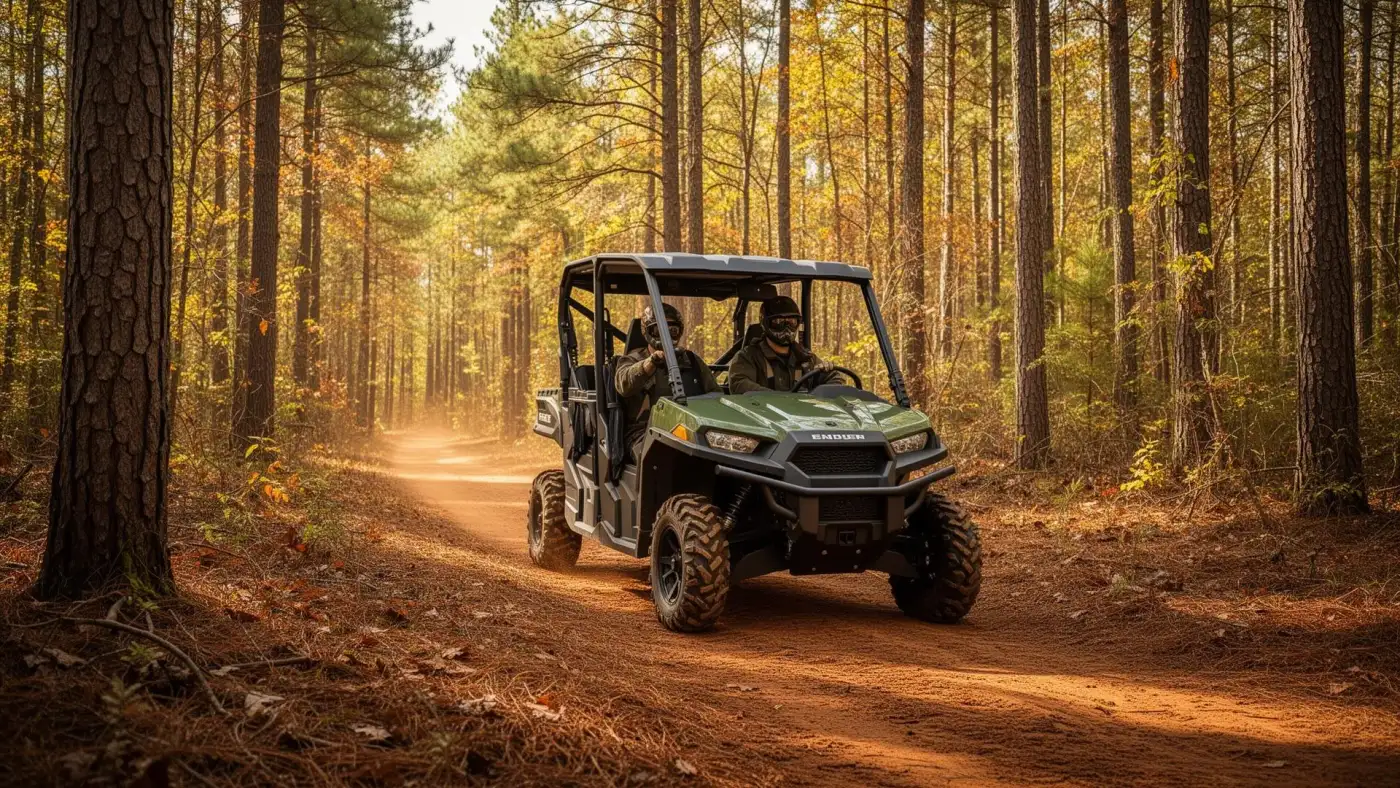
ATV & UTV Insurance in Alabama & Georgia
ATV and UTV insurance in Alabama and Georgia often runs about $100 to $400 a year, while financed side by sides commonly land closer to $200 to $500 for broader coverage. Coffey Agencies helps riders protect off-road vehicles, liability exposure, theft, and custom equipment from Centre and Rome; call (256) 927-6287 or (706) 784-6511.
What Does ATV/UTV Insurance Cover?
Off-road vehicle insurance protects you financially when accidents happen on the trail, on your property, or anywhere you ride. A comprehensive ATV insurance policy typically includes:
Liability Coverage
Pays for bodily injury and property damage you cause to others while operating your ATV or UTV. If you crash into another rider, damage a fence, or injure a passenger, liability coverage handles the costs so you're not paying out of pocket.
Collision Coverage
Repairs or replaces your vehicle after a crash with another ATV, a tree, a rock, or any obstacle. Rollovers are common on technical trails — collision coverage ensures you're not stuck with the repair bill.
Comprehensive Coverage
Protects against non-collision losses including theft, fire, vandalism, and storm damage. ATV theft is one of the most common claims in Alabama and Georgia — comprehensive coverage pays to replace your vehicle if it's stolen.
Uninsured/Underinsured Motorist
Protects you when another rider causes damage but lacks insurance. Since ATV insurance isn't legally required in either state, many riders on public trails have no coverage at all.
Medical Payments Coverage
Handles medical expenses for you and your passengers regardless of fault — critical given the injury risks of off-road riding.
Custom Parts & Accessories
Protects aftermarket upgrades like lift kits, wheels, winches, LED light bars, sound systems, and snorkel kits. Standard policies include limited accessory coverage, but you can increase limits to match your investment.
Local Trails and Riding Areas We Serve
Our ATV insurance expertise covers the most popular off-road destinations in North Alabama and Northwest Georgia.
Indian Mountain ATV Park
Piedmont, AL
One of the largest off-road parks in the South at 4,700 acres, straddling the Alabama-Georgia border. Miles of trails for ATVs, UTVs, and dirt bikes plus camping and fishing. This is where Cherokee County riders spend their weekends.
Highland Park Off-Road Resort
Cedartown, GA
85-90 miles of one-way trails rated beginner to expert in Northwest Georgia. Motocross tracks, scenic overlooks, and family-friendly terrain make this a favorite for Rome-area riders.
Houston Valley OHV Trails
Near Dalton, GA
The largest U.S. Forest Service OHV system in Georgia with 25 miles of wooded trails. Daily or annual permit required.
Choccolocco Mountain ORV Park
Jacksonville, AL
450 acres of rugged mountain trails in Calhoun County. Terrain ranges from moderate to extreme, including rock crawling for experienced riders.
The Ridge Outdoor Adventure Park
Springville, AL
25+ miles of ATV/UTV trails plus motocross tracks southwest of Gadsden.
Buck's Pocket State Park OHV Trail
DeKalb County, AL
A scenic 6.3-mile family-friendly trail northeast of Centre with creek crossings and hardwood forest.
What Vehicles Do We Insure?
We provide ATV insurance and UTV insurance for every off-road vehicle common to our region.
ATVs / Four-Wheelers / Quads
Single-rider or tandem-seat vehicles with handlebar steering. From utility models for farm work to sport quads for trail riding, four-wheeler insurance covers them all.
UTVs / Side-by-Sides
Polaris Rangers, RZRs, Can-Am Mavericks, Defenders, Honda Pioneers, Kawasaki Mules, and other side-by-side vehicles with steering wheels and bench or bucket seating. UTV insurance addresses higher vehicle values and passenger liability.
Dirt Bikes / Off-Road Motorcycles
Two-wheeled off-road vehicles for motocross and single-track trails. Many ATV owners also own dirt bikes — we can bundle coverage for both.
Golf Carts
Modified or lifted golf carts used in lake communities, campgrounds, or off-road parks.
Youth ATVs
Age-appropriate vehicles for younger riders. Coverage protects your investment and provides liability for supervised riding.
Do I Need ATV Insurance in Alabama or Georgia?
ATV insurance is not legally required in Alabama or Georgia for off-road use on private property. However, you likely still need coverage because:
Many trails and parks require liability insurance — Indian Mountain, Highland Park, and other riding areas may require proof of coverage
Lenders require full coverage if you finance your ATV or UTV
You're financially responsible for any injuries or damage you cause — without insurance, that comes out of your pocket
Theft is common — ATVs and UTVs are high-value targets, and comprehensive coverage pays to replace stolen vehicles
The average ATV insurance policy costs $100-300 per year for liability coverage, or $200-500 for full coverage.
That's less than a dollar a day to protect a vehicle worth thousands.
How Can I Save on ATV/UTV Insurance?
Bundle with Home or Auto
Multi-policy discounts typically save 5-15% on your ATV insurance premium. Many customers insure their truck, home, and side-by-side together.
Complete a Safety Course
ATV Safety Institute courses may qualify you for insurance discounts while making you a safer rider.
Choose Higher Deductibles
Raising your deductible from $250 to $500 or $1,000 lowers your premium.
Insure Multiple Vehicles Together
Own an ATV and a dirt bike? Insuring both on one policy often costs less than separate policies.
Maintain Continuous Coverage
Gaps in coverage can raise future premiums. Even during winter storage, keep at least comprehensive coverage active to protect against theft and storm damage.
ATV & UTV Coverage Levels at a Glance
| Coverage | What It Protects | Who Needs It |
|---|---|---|
| Liability | Other people and property if you cause an accident | All ATV/UTV owners |
| Collision | Your vehicle in a crash or rollover | Financed or high-value units |
| Comprehensive | Theft, fire, vandalism, and weather damage | Stored outdoors or high-value vehicles |
| Uninsured Motorist | You, if hit by an uninsured driver or rider | Riders on public roads or shared trails |
| Medical Payments | Your medical bills after an accident | All riders and passengers |
| Accessory Coverage | Aftermarket parts like winches, plows, and bumpers | Modified ATVs and UTVs |
How Much Does ATV Insurance Cost in Alabama?
ATV insurance in Alabama typically costs between $75 and $300 per year for a standard recreational ATV, depending on the vehicle's value, engine size, and how you use it. A basic liability-only policy for trail riding starts around $75 to $100 annually, while comprehensive and collision coverage on a $10,000 to $15,000 side-by-side or sport UTV runs $200 to $400 per year. Factors affecting your rate include your riding experience, claims history, where you store the vehicle, and whether you use it on public roads. Farm-use ATVs and UTVs used exclusively on private property often qualify for lower rates than recreational or sport models. Georgia ATV insurance costs are comparable, with rates slightly higher in metro areas due to theft risk. Bundling your ATV policy with auto or home insurance through our agency typically saves 10% to 15% on both policies. Call (256) 927-6287 for a quote tailored to your specific ATV or UTV. Se habla español.
What Does ATV and UTV Insurance Cover?
ATV and UTV insurance covers the same core protections as auto insurance but tailored to off-road vehicles. Liability coverage pays for injuries or property damage you cause to others while operating your ATV or UTV — critical when riding on shared trails, hunting leases, or public lands in Alabama and Georgia. Collision coverage repairs or replaces your vehicle after a crash, rollover, or impact with an object on the trail. Comprehensive coverage handles theft, fire, vandalism, flooding, and storm damage — particularly important in Alabama's severe weather corridor where hail and fallen trees damage stored vehicles. Medical payments coverage pays your own medical bills and those of your passengers regardless of fault. Accessory coverage protects aftermarket upgrades like winches, plow blades, LED light bars, custom bumpers, and cargo systems that add value beyond the base vehicle. Uninsured motorist coverage protects you if another rider or driver without insurance causes an accident involving your ATV. Our agents build coverage around how you actually use your machine.
Do I Need ATV Insurance in Georgia?
Georgia law requires liability insurance for any ATV or UTV operated on public roads, and many counties in North Georgia allow limited road use for registered off-highway vehicles. Even if you ride exclusively on private property or designated trails, ATV insurance protects you from significant financial exposure. A single ATV accident resulting in injury to a passenger or bystander can generate medical bills exceeding $50,000 — and without liability coverage, you pay that out of pocket. If you finance your ATV or UTV through a dealer or lender, your loan agreement almost certainly requires comprehensive and collision coverage until the vehicle is paid off. Georgia hunting leases and timber operations increasingly require proof of liability insurance for any motorized vehicles used on the property. Alabama has similar practical requirements even though off-road-only use does not carry a state insurance mandate. The cost of basic ATV liability coverage — often $75 to $150 per year — is minimal compared to the financial risk of riding uninsured. Our licensed agents help you determine the right coverage level for your riding habits. Call (256) 927-6287.
What Discounts Can I Get on ATV Insurance?
Multiple discounts can reduce your ATV and UTV insurance premiums in Alabama and Georgia. The multi-policy bundle discount provides the biggest savings — combining your ATV policy with auto, home, or other insurance through our agency typically reduces both premiums by 10% to 15%. If you insure multiple off-road vehicles on the same policy, multi-vehicle discounts apply to each additional ATV or UTV. Completing an approved ATV safety course through the ATV Safety Institute earns a safety course discount of 5% to 10% while making you a better rider. Experienced rider discounts reward claims-free history — three or more years without an ATV claim qualifies you with most carriers. Storing your ATV in a locked garage, barn, or enclosed trailer rather than outdoors reduces theft and weather exposure, potentially lowering your comprehensive premium. Paying your annual premium in full instead of monthly installments saves 5% to 8%. Seasonal storage discounts may apply if you suspend collision coverage during months you do not ride. Our agents at Coffey Agencies stack every applicable discount on your quote.
Frequently Asked Questions
Common questions about ATV and UTV insurance in Alabama and Georgia.
Is ATV insurance required in Alabama?
Is ATV insurance required in Georgia?
Do I need full coverage on a financed ATV?
Does ATV insurance cover accidents on private property?
Does ATV insurance cover rollover damage?
Does ATV insurance cover theft?
Does ATV insurance cover passengers?
Do I need insurance to ride at ATV parks?
Does my homeowners insurance cover my ATV?
How much does ATV insurance cost?
What's the difference between ATV and UTV insurance?
Can I insure multiple ATVs on one policy?
Does ATV insurance cover me if I'm towing a trailer?
What happens if my ATV is totaled?
Does ATV insurance cover damage from mud and water?
Is there a discount for taking a safety course?
Do I need insurance for a dirt bike?
Does ATV insurance cover me riding on someone else's property?
ATV Insurance Across Alabama & Georgia
We serve riders throughout both states from our offices in Centre, AL and Rome, GA.
Alabama
Communities near Indian Mountain, Choccolocco, and The Ridge
What Our Customers Say
"Cody's associates are always ready to help with friendliness and efficiency. I always feel important. They are the best."
Gina W.
Centre, AL
"Crystal was helpful and personable, making it a great experience."
Tony L.
Rome, GA
"Wonderful insurance agent and staff. Always helpful when changing vehicles and/or coverage. Cody and all of his staff are knowledgeable, professional and understanding. Been with them for years and very happy with my agent!"
Annette C.
Rome, GA
Complete Your Coverage
Explore additional insurance options to protect every aspect of your life.
Auto Insurance
Liability, collision, comprehensive & uninsured motorist coverage for AL & GA drivers.
Learn More →Home Insurance
Protect your home and belongings from storms, fire, theft, and liability claims.
Learn More →Motorcycle Insurance
Coverage for cruisers, sport bikes, and touring machines with custom parts protection.
Learn More →Boat Insurance
Protect your boat, PWC, or watercraft with liability, hull coverage, and on-water towing.
Learn More →Life Insurance
Term life, whole life, and final expense options to protect your family's future.
Learn More →Renters Insurance
Affordable coverage for your belongings, liability, and temporary housing from $8/month.
Learn More →Powersports Insurance
Unified coverage for motorcycles, ATVs, boats, jet skis, golf carts, and trailers across AL & GA.
Learn More →Mobile Home Insurance
Coverage for manufactured homes that other agencies won't touch.
Learn More →Learn More About ATV & UTV Insurance
Want to understand liability vs full coverage, trail park requirements, and what affects your rate? Explore our comprehensive guide:
Ready to Protect Your ATV or UTV?
Get an ATV insurance quote in minutes. Whether you ride a Polaris, Can-Am, Honda, Yamaha, or Kawasaki, we'll help you find the right coverage for your vehicle, your trails, and your budget.