
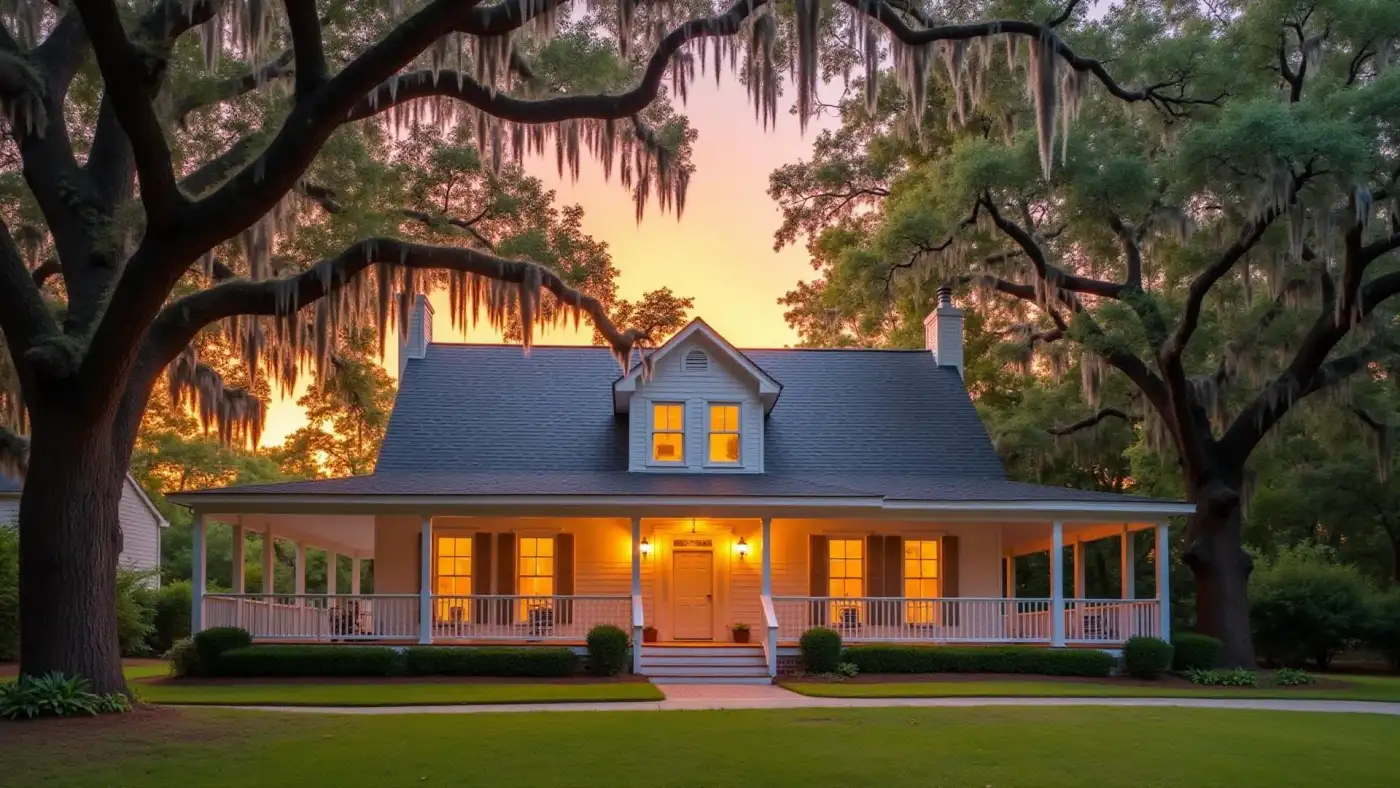
Homeowners Insurance in Alabama & Georgia
Home insurance averages about $1,650 a year in Alabama and $1,800 in Georgia, with standard policies covering the dwelling, personal property, liability, and additional living expenses. Coffey Agencies has served homeowners since 2009 from Centre and Rome; call (256) 927-6287 or (706) 784-6511 for home, condo, or mobile home coverage.
What Does Home Insurance Cover?
Dwelling (Coverage A)
Pays to rebuild the home itself after a covered loss. We estimate replacement cost—not market value—so materials, labor, and debris removal are factored in.
Other Structures (B)
Covers detached items like fences, sheds, and detached garages. Limits are often a percentage of Coverage A; we can adjust if you've added outbuildings.
Personal Property (C)
Protects belongings (furniture, clothing, electronics). Choose Replacement Cost (RCV) to avoid depreciation; Actual Cash Value (ACV) lowers cost but pays less at claim time.
Loss of Use (D)
Helps with temporary living expenses if your home is uninhabitable after a covered loss—think hotels, short-term rentals, meals, and extra mileage.
Personal Liability (E)
Protects you if someone is injured or you cause property damage away from home. Higher limits help safeguard wages and savings.
Medical Payments (F)
Pays small medical bills for guests hurt on your property, regardless of fault. It's a goodwill coverage that can help minor injuries go smoothly.
Wind/Hail Deductibles
In storm-exposed areas, wind or named-storm deductibles may apply, sometimes as a flat dollar amount or a percentage of the dwelling limit. We'll model choices you can afford to pay tomorrow.
Water Backup
Adds coverage for damage from backed-up sewers or drains and sump pump overflows—typically not covered by default. Consider adding if you have a basement or low-lying plumbing.
Roof Age & Surfaces
Older roofs may get ACV settlements for wind/hail unless upgraded to RCV. Disclosing roof age and materials upfront helps us price accurately and avoid surprises.
What Weather Risks Affect Home Insurance in AL & GA?
Tornado Risk (Both States)
Central Alabama sits in "Dixie Alley"—the Southern tornado corridor with peak activity from March through May. Northwest Georgia, including Floyd and Bartow counties, also experiences significant tornado activity. Standard homeowners insurance covers tornado damage, but wind/hail deductibles may apply separately from your standard deductible.
Hurricane Risk (Coastal Areas)
Coastal Alabama (Mobile, Baldwin County, Gulf Shores) and coastal Georgia (Savannah, Chatham County) face hurricane exposure. Many home insurance policies include separate hurricane deductibles—typically 2-5% of your dwelling coverage—that apply when a named storm causes damage.
Wind and Hail Deductibles
Unlike your standard deductible (a flat dollar amount like $1,000), wind/hail deductibles in AL and GA are often percentage-based. A 2% wind/hail deductible on a $300,000 home means you pay the first $6,000 of any wind or hail claim. Understanding this distinction is critical for your homeowners insurance before storm season.
Water Damage & Flooding
Burst pipes, appliance leaks, and water heater failures are covered by home insurance. However, flooding from rising water (rivers, storm surge, heavy rain accumulation) is NOT covered—you need separate flood insurance. Georgia's older homes in Atlanta and Alabama properties near rivers or the Gulf should consider flood coverage.
| Coverage Component | Alabama | Georgia |
|---|---|---|
| Average Annual Premium | ~$1,650/year | ~$1,800/year |
| Top Weather Risk | Tornadoes (Dixie Alley) | Hail & severe storms |
| Wind/Hail Deductible | 1–2% of dwelling coverage | 1–2% of dwelling coverage |
| Flood Insurance | Separate policy (NFIP) | Separate policy (NFIP) |
| Feature | Basic (HO-1) | Broad (HO-2) | Special (HO-3) |
|---|---|---|---|
| Perils Covered | 10 named perils | 16 named perils | All perils except exclusions |
| Dwelling Protection | Named perils only | Named perils only | Open perils (broadest) |
| Personal Property | Named perils only | Named perils only | Named perils (16) |
| Typical Deductible | $1,000–$2,500 | $1,000–$2,500 | $1,000–$5,000 |
| Recommendation | Rarely sold today | Budget option | Most common — recommended |
| Scenario | Covered? | Details |
|---|---|---|
| Tornado damages roof | Yes | Wind/hail deductible applies (1–2% of dwelling) |
| Kitchen fire | Yes | Dwelling + contents + additional living expenses |
| Pipe bursts inside wall | Yes | Sudden/accidental water damage covered |
| Theft of belongings | Yes | Personal property coverage up to policy limits |
| Flood from rising water | No | Requires separate flood policy (NFIP or private) |
| Sewer/drain backup | No | Requires optional endorsement — ask us about adding it |
| Normal wear and tear | No | Maintenance issues excluded from all policies |
Regional Risk Profiles and Local Considerations
Homeowners insurance costs across our service area reflect each county's unique combination of weather exposure, construction types, and local risk factors. Jefferson County sits at the heart of Alabama's "Tornado Alley"—123 tornadoes since 1950, including the devastating F5 in 1998 and seven twisters during April 2011 alone. That catastrophic 2011 outbreak resulted in over $1.65 billion in Alabama home insurance payouts, with Jefferson heavily impacted. Many homes rebuilt post-2011 with fortified roofing and hurricane clips now qualify for mitigation credits, but wind/hail deductibles (typically 1-2% of dwelling coverage) remain standard.
Tuscaloosa County's April 27, 2011 EF4 tornado caused over $2 billion in statewide insured losses and reshaped local building practices. Newer homes meet stricter wind codes, and many residents installed storm shelters. The University of Alabama's presence creates a unique rental market—many older homes converted to student housing require landlord policies with higher liability limits. Etowah County experiences frequent tornado warnings each spring, and Gadsden's Coosa River location adds flood exposure to certain neighborhoods requiring separate National Flood Insurance Program policies.
Cherokee County homeowners benefit from rural character—75.9% single-family homes and 16.7% mobile homes on larger lots mean lower population density (about 44 people per square mile) and minimal property crime. However, distance from fire stations (many homes over 5 miles from volunteer departments) can affect premium calculations. The county still experiences Dixie Alley weather—about 1.3 tornadoes annually over the last decade—making wind/hail coverage essential. Madison County (Huntsville) brings aerospace industry prosperity, higher home values, and urban fire protection that balances tornado exposure.
Georgia counties present different profiles. Fulton County faces moderate tornado risk (averaging a couple warnings per year, with the memorable 2008 downtown Atlanta tornado), but urban factors drive premiums—high property values (many neighborhoods exceeding $400,000 median), older housing stock from the 1920s-1950s requiring costly repairs, and property crime variation by neighborhood. ZIP code pricing differentials are stark: north Fulton's Alpharetta sees hail from occasional spring storms, while south Fulton ZIP codes may carry higher theft-related surcharges.
Gwinnett County homeowners deal with hailstorms that strike a couple times annually—recent events caused extensive roof damage countywide. Rapid suburban development created impervious surfaces, leading to flash flooding in subdivisions during heavy rains. Cobb County shares similar suburban dynamics with added traffic challenges affecting liability exposure. Floyd County (Rome) maintains more moderate premiums—newer construction standards, manageable weather risk, and small-city crime rates keep costs below metro Atlanta's levels. DeKalb and Bartow counties each balance urban/suburban characteristics with their own local considerations.
Granular ZIP code analysis reveals significant rate variations within counties. Birmingham's 35242 (Hoover/Greystone) features newer construction, strong fire protection through Hoover Fire Department, and lower crime—resulting in premiums often 15-20% below Birmingham proper despite sitting in high-risk Jefferson County. Median home values around $320,000 drive higher dwelling coverage needs, but mitigation credits for post-2011 fortified construction help offset costs. 35215 (northeast Birmingham near Roebuck) contains older housing stock (many 1950s-1970s homes) with aging systems, plus higher burglary rates that elevate theft coverage costs. 35173 (Trussville) enjoys Jefferson County's most competitive rates—newer subdivisions, excellent fire protection, median home values around $285,000, and family demographics that insurers favor.
Montgomery's 36117 (EastChase/Deer Creek area) balances newer development with proximity to Alabama River flood zones—some properties require flood insurance while others sit safely elevated. The ZIP code includes both upscale neighborhoods with $300,000+ homes and more modest areas, creating rating variation. Maxwell Air Force Base's presence means many military families who may need deployment-specific policy provisions.
35960 (Centre in Cherokee County) consistently delivers competitive premiums—median home values around $176,000, homeownership rate near 75%, and rural character mean base rates start low. However, distance from fire stations (Centre's volunteer department serves a wide area) and mobile home prevalence (16.7% of housing units) create specific underwriting considerations. Tornado/hail coverage is non-negotiable given the county's weather exposure.
Georgia ZIPs tell their own stories. 30044 (Lawrenceville/Snellville area in Gwinnett) represents suburban growth—median home values around $290,000, homeownership rate near 67%, and newer construction from the 1990s-2010s. The ZIP code sees moderate premiums around $1,800-$2,200 annually, reflecting Gwinnett's balanced risk profile. 30043 (neighboring Lawrenceville) mirrors these characteristics with slight variations in home age and value. Both benefit from Gwinnett County's strong fire protection and suburban crime rates.
Atlanta's 30349 (College Park/near airport) faces urban challenges—higher property crime, older housing stock, and proximity to high-traffic areas push premiums above Fulton County averages despite median home values around $180,000. Fire claims from older electrical systems and liability concerns in dense neighborhoods affect pricing. 30161 (Rome in Floyd County) offers more moderate rates—median home values around $195,000, newer building codes, and small-city dynamics keep annual premiums typically $1,400-$1,700 for comparable coverage. 30120 (Cartersville in Bartow County) balances I-75 corridor growth with manageable risk factors, landing in the $1,500-$1,900 range for standard policies.
How Much Does Homeowners Insurance Cost in Alabama vs Georgia?
Home insurance costs vary dramatically between Alabama and Georgia—understanding why can help you find better rates.
Alabama (AL)
~$3,000+/year
Alabama has some of the highest homeowners insurance premiums in the nation. Factors driving costs include:
- Severe weather exposure (tornadoes, Gulf Coast hurricanes)
- High frequency of wind and hail claims
- Percentage-based wind/hail deductibles (often 1-2%)
- Older housing stock in some areas
Georgia (GA)
~$1,800-2,300/year
Georgia homeowners typically pay 25-40% less than Alabama residents for similar home insurance coverage:
- Atlanta metro rates trend higher due to property values
- Rural Georgia often sees lower premiums
- Less coastal hurricane exposure than AL
- Newer housing stock in metro suburbs
Factors Affecting Your Homeowners Insurance Rate
Given Alabama's higher-than-average costs, reviewing your homeowners insurance regularly is essential. We help AL and GA homeowners find the best combination of coverage and price through bundling and discount optimization.
How Can AL & GA Homeowners Save on Insurance?
Bundle home & auto
One account, fewer headaches, and meaningful multi-policy savings. We'll show you how bundling affects your rate.
Protective devices
Monitored security systems, smoke/CO detectors, water shut-off valves, and leak sensors can reduce loss risk—and may qualify for discounts.
Newer roof
Updating an aging roof can improve insurability and pricing. Document materials and install date; impact-resistant shingles may qualify for additional discounts.
Autopay & paperless
Set-and-forget billing helps avoid lapses and can trim premium. Paperless delivery keeps everything in one place.
Right-size deductibles
Raising deductibles lowers premium, but keep them at a level you could comfortably pay after a storm. We'll model a few options.
Review coverage annually
Life changes—renovations, paid-off mortgages, new valuables. An annual review ensures you're not overpaying or underprotected. We'll help you adjust.
How Much Does Home Insurance Cost in Alabama?
Home insurance in Alabama averages $1,800 to $2,800 per year for a standard policy on a $250,000 dwelling, though rates vary significantly by location, construction type, and proximity to severe weather corridors. North Alabama counties in the tornado alley corridor — including Madison, Morgan, and Limestone — typically see higher premiums due to wind and hail exposure, while coastal Baldwin and Mobile counties face hurricane and flood surcharges. Georgia homeowners pay slightly less on average, with typical premiums ranging from $1,500 to $2,400 annually for comparable coverage. Your specific rate depends on your home's age, roof condition, claims history, and the deductible structure you choose. Wind and hail deductibles in Alabama often run 1% to 2% of dwelling coverage — on a $300,000 home, that means $3,000 to $6,000 out of pocket before standard coverage kicks in. Our licensed agents at Coffey Agencies review these deductible structures during every quote so you understand exactly what you are buying. Call (256) 927-6287 for a personalized home insurance quote. Se habla español.
What Does Homeowners Insurance Cover in Alabama and Georgia?
A standard homeowners insurance policy in Alabama and Georgia covers four main areas: dwelling coverage that pays to repair or rebuild your home's structure after covered damage from fire, wind, hail, lightning, or fallen trees; personal property coverage protecting your belongings inside the home including furniture, electronics, clothing, and appliances; liability coverage if someone is injured on your property or you accidentally damage someone else's property; and additional living expenses that pay for temporary housing and meals if your home becomes uninhabitable after a covered loss. Standard policies typically exclude flood damage, earthquake damage, and gradual wear issues like mold or termite damage. In Alabama's severe weather corridor, wind and hail damage is covered but often subject to a separate percentage-based deductible rather than a flat dollar amount. Sewer backup coverage, valuable items riders for jewelry or art, and identity theft protection are common add-ons Alabama and Georgia homeowners should consider. Our agents help you build a policy that covers your actual risks without paying for coverage you do not need.
Do I Need Flood Insurance in Alabama or Georgia?
Standard homeowners insurance does not cover flood damage in Alabama or Georgia — you need a separate flood insurance policy. If your home sits in a FEMA-designated high-risk flood zone (Zone A or Zone AE), your mortgage lender requires flood insurance as a condition of your loan. But even if you are in a moderate-to-low risk zone, flood coverage deserves serious consideration: nearly 30% of all flood insurance claims nationwide come from properties outside high-risk flood zones. Alabama's Tennessee River system, Coosa River basin, and Mobile Bay watershed create flood exposure across dozens of communities. Georgia's Chattahoochee River corridor, Flint River system, and Piedmont region experience flash flooding during severe thunderstorms. Flood insurance through the National Flood Insurance Program typically costs $500 to $1,500 annually depending on your elevation, flood zone, and coverage limits. Private flood insurance carriers sometimes offer lower rates or higher coverage limits than the NFIP. Our agents at Coffey Agencies check both options to find the best flood coverage for your property.
How Can I Lower My Home Insurance Premium?
The most effective way to lower your home insurance premium in Alabama and Georgia is bundling your home and auto policies together, which typically saves 15% to 25% on both policies. Beyond bundling, several strategies reduce your rate: increasing your standard deductible from $1,000 to $2,500 can lower premiums by 10% to 15%, though you need to ensure you can cover that amount out of pocket after a claim. Installing monitored security systems, smoke detectors, and water leak sensors often qualifies for protective device discounts of 5% to 15%. Upgrading your roof to impact-resistant materials — Class 4 shingles or metal roofing — can earn significant wind and hail discounts in Alabama's tornado-prone regions. Maintaining a claims-free history for three or more years earns loyalty and claims-free discounts with most carriers. Paying your annual premium in a single payment instead of monthly installments eliminates installment fees and sometimes triggers an additional discount. Our agents review your full financial picture to find every available discount. Call (256) 927-6287 for a complimentary coverage review.
Home Insurance Questions We Answer Every Day
How much does homeowners insurance cost in Alabama vs Georgia?
How do wind and hail deductibles work in Alabama and Georgia?
Does homeowners insurance cover tornado damage?
What's the difference between RCV and ACV for personal property?
What documents do I need for a homeowners insurance quote?
Is home insurance required in Alabama or Georgia?
Can I bundle home and auto insurance for savings?
Will roof age change how a homeowners insurance claim is paid?
Is flood insurance required in Alabama or Georgia?
What happens if I'm underinsured when I file a claim?
Should I file small claims?
How do I document my belongings for insurance purposes?
Does my neighbor's tree falling on my house go on their insurance?
Can I get home insurance on a mobile home in Alabama or Georgia?
Learn More About Home Insurance
Want to understand coverage types, deductibles, and how to protect your Alabama or Georgia home? Explore our guides:
What Our Clients Say
"I've worked with the Coffey agency for many years and always had high-level experiences with every agent. Crystal was patient, knowledgeable, honest and thorough in answering questions about policy coverages and hypotheticals. They treat people with exceptional knowledge, communication and kindness."
Sarah R.
Rome, GA
"The team is always helpful and available to answer questions. I appreciate their attention to detail on home and car insurance."
BJ
Rome, GA
"The staff is very helpful with auto and home insurance, always responsive and detailed."
Katy S.
Rome, GA
Complete Your Coverage
Explore additional insurance options to protect every aspect of your life.
Auto Insurance
Liability, collision, comprehensive & uninsured motorist coverage for Alabama and Georgia drivers.
Learn More →Mobile Home Insurance
Coverage for manufactured homes that other agencies won't touch. Specialty options for older mobile homes.
Learn More →Renters Insurance
Affordable coverage for your belongings, liability, and temporary housing from $8/month.
Learn More →Condo Insurance
HO-6 walls-in coverage, loss assessment protection, and master policy coordination.
Learn More →Life Insurance
Term life, whole life, and final expense options to protect your family's future.
Learn More →Motorcycle Insurance
Coverage for cruisers, sport bikes, and touring machines with custom parts protection.
Learn More →Boat Insurance
Protect your boat, PWC, or watercraft with liability, hull coverage, and on-water towing.
Learn More →ATV/UTV Insurance
Coverage for ATVs, UTVs, and side-by-sides whether you ride trails, hunt, or work the land.
Learn More →Powersports Insurance
Unified coverage for motorcycles, ATVs, boats, jet skis, golf carts, and trailers across AL & GA.
Learn More →Homeowners Insurance Across AL & GA
We provide homeowners insurance across Alabama — including Jefferson County (Birmingham), Montgomery County, Mobile County, Madison County (Huntsville), Baldwin County (Gulf Shores), Cherokee County (Centre), Tuscaloosa County, and Etowah County (Gadsden) — as well as Georgia communities in Fulton County (Atlanta), Gwinnett County (Lawrenceville), Cobb County, DeKalb County, Floyd County (Rome), Bartow County (Cartersville), and Chatham County (Savannah).
Our home insurance coverage extends to ZIP codes including 35242, 35215, 35173 (Birmingham area), 36117 (Montgomery), 36695 (Mobile), 35960 (Centre), 35801 (Huntsville), 36561 (Gulf Shores), 30044, 30043 (Gwinnett), 30161 (Rome), 30120 (Cartersville), 30349 (South Atlanta), and communities throughout AL and GA.
Alabama (AL)
Don't see your city? Contact us — we serve all of AL and GA with homeowners insurance.
Live Near Weiss Lake or in Centre, AL?
Learn how tornadoes, hail, and storm season in Cherokee County affect your home insurance — and what smart coverage looks like.
Read the Centre, AL Storm-Season GuideProtect your whole household. Explore our auto insurance for your vehicles, life insurance for your family's future, or condo insurance if you own a condo. As a local agency with offices in Centre, AL and Rome, GA, we understand regional risks that national companies often miss—that local knowledge translates to better homeowners insurance coverage and better pricing for AL and GA families.
Ready to Protect Your Home?
Get a quote that fits your home, roof, and budget.