
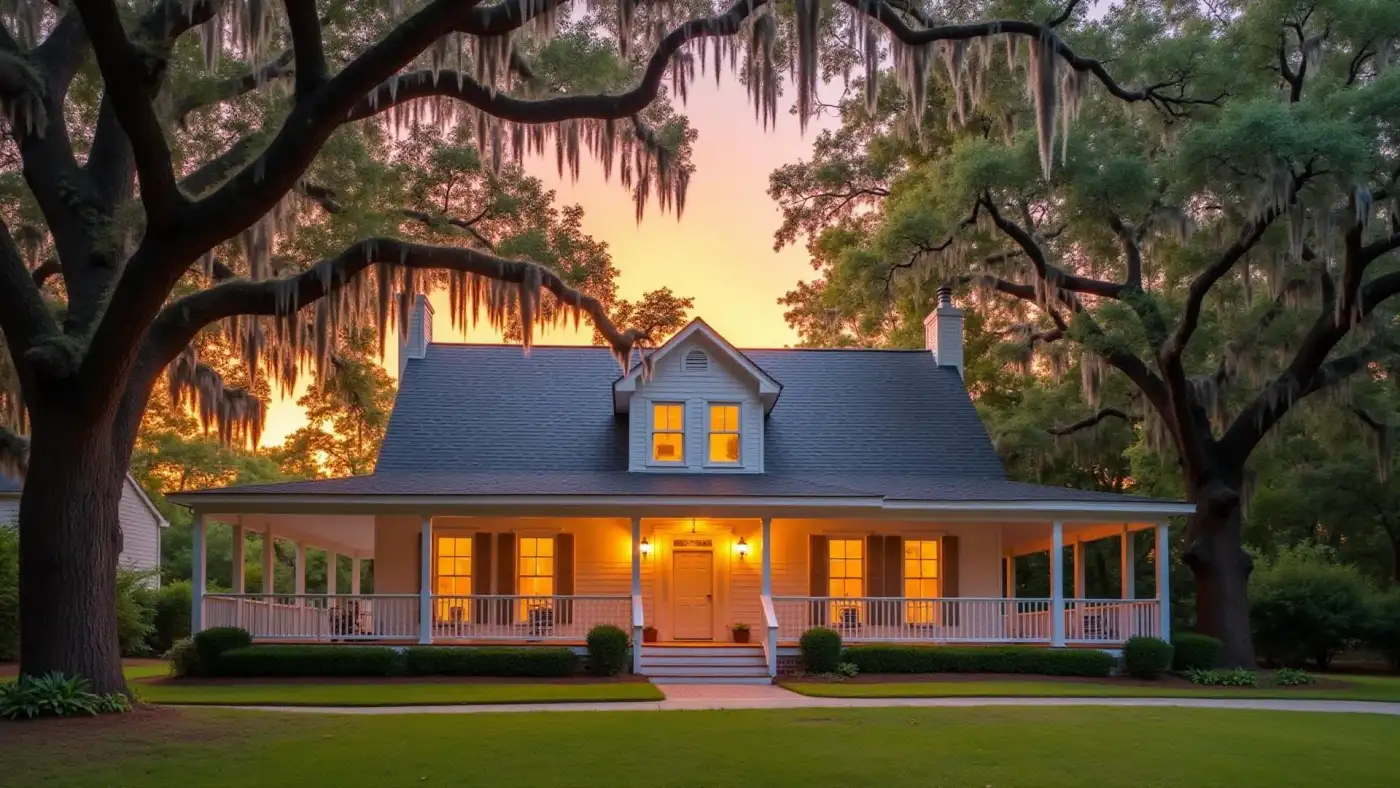
Homeowners Insurance in Alabama & Georgia
Home insurance on a $250,000 dwelling typically runs $1,800 to $2,800 a year in Alabama and $1,500 to $2,400 in Georgia, depending on location, roof age, and weather exposure. Standard HO-3 policies cover the dwelling, personal property, liability, and additional living expenses. Coffey Agencies has served homeowners since 2009 from Centre and Rome; call (256) 927-6287 or (706) 784-6511 for a quote.
What Does Home Insurance Cover?
Dwelling (Coverage A)
Pays to rebuild the home itself after a covered loss. We estimate replacement cost—not market value—so materials, labor, and debris removal are factored in.
Other Structures (B)
Covers detached items like fences, sheds, and detached garages. Limits are often a percentage of Coverage A; we can adjust if you've added outbuildings.
Personal Property (C)
Protects belongings (furniture, clothing, electronics). Choose Replacement Cost (RCV) to avoid depreciation; Actual Cash Value (ACV) lowers cost but pays less at claim time.
Loss of Use (D)
Helps with temporary living expenses if your home is uninhabitable after a covered loss—think hotels, short-term rentals, meals, and extra mileage.
Personal Liability (E)
Protects you if someone is injured or you cause property damage away from home. Higher limits help safeguard wages and savings.
Medical Payments (F)
Pays small medical bills for guests hurt on your property, regardless of fault. It's a goodwill coverage that can help minor injuries go smoothly.
Wind/Hail Deductibles
In storm-exposed areas, wind or named-storm deductibles may apply, sometimes as a flat dollar amount or a percentage of the dwelling limit. We'll model choices you can afford to pay tomorrow.
Water Backup
Adds coverage for damage from backed-up sewers or drains and sump pump overflows—typically not covered by default. Consider adding if you have a basement or low-lying plumbing.
Roof Age & Surfaces
Older roofs may get ACV settlements for wind/hail unless upgraded to RCV. Disclosing roof age and materials upfront helps us price accurately and avoid surprises.
Get Your Free Quote
No obligation — a licensed agent will call you the same business day.
What Weather Risks Affect Home Insurance in AL & GA?
Tornado Risk (Both States)
Central Alabama sits in "Dixie Alley"—the Southern tornado corridor with peak activity from March through May. Northwest Georgia, including Floyd and Bartow counties, also experiences significant tornado activity. Standard homeowners insurance covers tornado damage, but wind/hail deductibles may apply separately from your standard deductible.
Hurricane Risk (Coastal Areas)
Coastal Alabama (Mobile, Baldwin County, Gulf Shores) and coastal Georgia (Savannah, Chatham County) face hurricane exposure. Many home insurance policies include separate hurricane deductibles—typically 2-5% of your dwelling coverage—that apply when a named storm causes damage.
Wind and Hail Deductibles
Unlike your standard deductible (a flat dollar amount like $1,000), wind/hail deductibles in AL and GA are often percentage-based. A 2% wind/hail deductible on a $300,000 home means you pay the first $6,000 of any wind or hail claim. Understanding this distinction is critical for your homeowners insurance before storm season.
Water Damage & Flooding
Burst pipes, appliance leaks, and water heater failures are covered by home insurance. However, flooding from rising water (rivers, storm surge, heavy rain accumulation) is NOT covered—you need separate flood insurance. Georgia's older homes in Atlanta and Alabama properties near rivers or the Gulf should consider flood coverage.
| Coverage Component | Alabama | Georgia |
|---|---|---|
| Typical Annual Premium ($250k dwelling) | $1,800–$2,800/year | $1,500–$2,400/year |
| Top Weather Risk | Tornadoes (Dixie Alley) | Hail & severe storms |
| Wind/Hail Deductible | 1–2% of dwelling coverage | 1–2% of dwelling coverage |
| Flood Insurance | Separate policy (NFIP) | Separate policy (NFIP) |
| Feature | Basic (HO-1) | Broad (HO-2) | Special (HO-3) |
|---|---|---|---|
| Perils Covered | 10 named perils | 16 named perils | All perils except exclusions |
| Dwelling Protection | Named perils only | Named perils only | Open perils (broadest) |
| Personal Property | Named perils only | Named perils only | Named perils (16) |
| Typical Deductible | $1,000–$2,500 | $1,000–$2,500 | $1,000–$5,000 |
| Recommendation | Rarely sold today | Budget option | Most common — recommended |
| Scenario | Covered? | Details |
|---|---|---|
| Tornado damages roof | Yes | Wind/hail deductible applies (1–2% of dwelling) |
| Kitchen fire | Yes | Dwelling + contents + additional living expenses |
| Pipe bursts inside wall | Yes | Sudden/accidental water damage covered |
| Theft of belongings | Yes | Personal property coverage up to policy limits |
| Flood from rising water | No | Requires separate flood policy (NFIP or private) |
| Sewer/drain backup | No | Requires optional endorsement — ask us about adding it |
| Normal wear and tear | No | Maintenance issues excluded from all policies |
How Much Does Homeowners Insurance Cost in Alabama vs Georgia?
Home insurance costs vary dramatically between Alabama and Georgia—understanding why can help you find better rates.
Alabama (AL)
$1,800–$2,800/yr
Standard HO-3 on a $250k dwelling
Alabama premiums run above the national average due to severe weather exposure. Key cost drivers:
- Severe weather exposure (tornadoes, Gulf Coast hurricanes)
- High frequency of wind and hail claims
- Percentage-based wind/hail deductibles (often 1-2%)
- Older housing stock in some areas
Georgia (GA)
$1,500–$2,400/yr
Standard HO-3 on a $250k dwelling
Georgia homeowners typically pay less than Alabama for similar coverage:
- Atlanta metro rates trend higher due to property values
- Rural Georgia often sees lower premiums
- Less coastal hurricane exposure than AL
- Newer housing stock in metro suburbs
Factors Affecting Your Homeowners Insurance Rate
Given Alabama's higher-than-average costs, reviewing your homeowners insurance regularly is essential. We help AL and GA homeowners find the best combination of coverage and price through bundling and discount optimization.
How Can AL & GA Homeowners Save on Insurance?
Bundle home & auto
One account, fewer headaches, and meaningful multi-policy savings. We'll show you how bundling affects your rate.
Protective devices
Monitored security systems, smoke/CO detectors, water shut-off valves, and leak sensors can reduce loss risk—and may qualify for discounts.
Newer roof
Updating an aging roof can improve insurability and pricing. Document materials and install date; impact-resistant shingles may qualify for additional discounts.
Autopay & paperless
Set-and-forget billing helps avoid lapses and can trim premium. Paperless delivery keeps everything in one place.
Right-size deductibles
Raising deductibles lowers premium, but keep them at a level you could comfortably pay after a storm. We'll model a few options.
Review coverage annually
Life changes—renovations, paid-off mortgages, new valuables. An annual review ensures you're not overpaying or underprotected. We'll help you adjust.
How Wind, Hail, and Roof Deductibles Affect Claims in Alabama and Georgia
Most Alabama and Georgia homeowners carry two deductibles without realizing it. Your standard deductible is a flat dollar amount — typically $1,000 to $2,500 — that applies to fire, theft, and water damage claims. But wind and hail claims trigger a separate percentage-based deductible calculated on your dwelling coverage limit, not the claim amount. On a $300,000 home with a 2% wind/hail deductible, you pay the first $6,000 out of pocket before coverage kicks in.
Alabama's position in Dixie Alley — the Southern tornado corridor running from central Mississippi through north Alabama — makes this distinction critical. Cherokee, Madison, Morgan, and Limestone counties see peak tornado and hail activity from March through May. Coastal Baldwin and Mobile counties face separate hurricane deductibles of 2% to 5% triggered by named storms. Georgia homeowners in Floyd, Bartow, and Gwinnett counties experience regular hailstorms that can cause widespread roof damage in a single event.
Roof age directly affects how claims are paid. Policies on roofs less than 10 years old typically pay full Replacement Cost Value (RCV) — the actual cost to install a new roof of similar materials. Roofs over 15 years old may only receive Actual Cash Value (ACV), which subtracts depreciation. A 20-year-old architectural shingle roof that costs $15,000 to replace might only pay out $5,000 to $7,000 under ACV after depreciation. Upgrading to impact-resistant materials — Class 4 shingles or standing-seam metal — can qualify for wind/hail discounts of 10% to 25% and ensure full RCV coverage on future claims.
Our agents at Coffey Agencies model deductible scenarios during every quote so you see exactly what you would pay after a tornado, hailstorm, or hurricane claim. Understanding these numbers before storm season is the difference between a manageable repair and a financial emergency. Call (256) 927-6287 for a deductible review. Se habla espanol.
Do I Need Flood Insurance in Alabama or Georgia?
Standard homeowners insurance does not cover flood damage in Alabama or Georgia — you need a separate flood insurance policy. If your home sits in a FEMA-designated high-risk flood zone (Zone A or Zone AE), your mortgage lender requires flood insurance as a condition of your loan. But even if you are in a moderate-to-low risk zone, flood coverage deserves serious consideration: nearly 30% of all flood insurance claims nationwide come from properties outside high-risk flood zones. Alabama's Tennessee River system, Coosa River basin, and Mobile Bay watershed create flood exposure across dozens of communities. Georgia's Chattahoochee River corridor, Flint River system, and Piedmont region experience flash flooding during severe thunderstorms. Flood insurance through the National Flood Insurance Program typically costs $500 to $1,500 annually depending on your elevation, flood zone, and coverage limits. Private flood insurance carriers sometimes offer lower rates or higher coverage limits than the NFIP. Our agents at Coffey Agencies check both options to find the best flood coverage for your property.
Home Insurance Questions We Answer Every Day
How do wind and hail deductibles work in Alabama and Georgia?
Does homeowners insurance cover tornado damage?
What's the difference between RCV and ACV for personal property?
What documents do I need for a homeowners insurance quote?
Is home insurance required in Alabama or Georgia?
Will roof age change how a homeowners insurance claim is paid?
What happens if I'm underinsured when I file a claim?
Should I file small claims?
How do I document my belongings for insurance purposes?
Does my neighbor's tree falling on my house go on their insurance?
Can I get home insurance on a mobile home in Alabama or Georgia?
Learn More About Home Insurance
Want to understand coverage types, deductibles, and how to protect your Alabama or Georgia home? Explore our guides:
What Our Clients Say
"I've worked with the Coffey agency for many years and always had high-level experiences with every agent. Crystal was patient, knowledgeable, honest and thorough in answering questions about policy coverages and hypotheticals. They treat people with exceptional knowledge, communication and kindness."
Sarah R.
Rome, GA
"The team is always helpful and available to answer questions. I appreciate their attention to detail on home and car insurance."
BJ
Rome, GA
"The staff is very helpful with auto and home insurance, always responsive and detailed."
Katy S.
Rome, GA
Complete Your Coverage
Explore additional insurance options to protect every aspect of your life.
Auto Insurance
Liability, collision, comprehensive & uninsured motorist coverage for Alabama and Georgia drivers.
Learn More →Mobile Home Insurance
Coverage for manufactured homes that other agencies won't touch. Specialty options for older mobile homes.
Learn More →Renters Insurance
Affordable coverage for your belongings, liability, and temporary housing from $8/month.
Learn More →Condo Insurance
HO-6 walls-in coverage, loss assessment protection, and master policy coordination.
Learn More →Life Insurance
Term life, whole life, and final expense options to protect your family's future.
Learn More →Motorcycle Insurance
Coverage for cruisers, sport bikes, and touring machines with custom parts protection.
Learn More →Boat Insurance
Protect your boat, PWC, or watercraft with liability, hull coverage, and on-water towing.
Learn More →ATV/UTV Insurance
Coverage for ATVs, UTVs, and side-by-sides whether you ride trails, hunt, or work the land.
Learn More →Powersports Insurance
Unified coverage for motorcycles, ATVs, boats, jet skis, golf carts, and trailers across AL & GA.
Learn More →Homeowners Insurance Across AL & GA
We write homeowners insurance across every county in Alabama and Georgia. See our full service area →
Alabama (AL)
Don't see your city? Contact us — we serve all of AL and GA with homeowners insurance.
Live Near Weiss Lake or in Centre, AL?
Learn how tornadoes, hail, and storm season in Cherokee County affect your home insurance — and what smart coverage looks like.
Read the Centre, AL Storm-Season GuideProtect your whole household. Explore our auto insurance for your vehicles, life insurance for your family's future, or condo insurance if you own a condo. As a local agency with offices in Centre, AL and Rome, GA, we understand regional risks that national companies often miss—that local knowledge translates to better homeowners insurance coverage and better pricing for AL and GA families.
Ready to Protect Your Home?
Get a quote that fits your home, roof, and budget.